
Understanding Brain Fog and Why Sound Therapy Matters
Do you walk into a room and forget why you went there? Struggle to finish sentences during important conversations? Feel like you’re thinking through a thick mental haze that never quite lifts?
Brain fog affects millions worldwide, disrupting careers, relationships, and daily functioning. As someone who has studied cognitive neuroscience and explored non-pharmaceutical interventions for mental performance, I’ve witnessed the profound frustration this condition creates.
What surprises most people is that the solution might not require medication, expensive therapies, or drastic lifestyle changes. Emerging neuroscience reveals that specific sound frequencies can measurably improve cognitive function—a discovery backed by rigorous clinical research.
In this comprehensive guide, you’ll discover exactly how to reduce brain fog with sound therapy. You’ll learn the scientific mechanisms behind this approach, which specific frequencies work best, how to implement sound therapy protocols effectively, and what realistic results to expect based on peer-reviewed studies.
This isn’t pseudoscience or wishful thinking. Multiple research institutions, including MIT and leading neuroscience departments, have published evidence demonstrating that targeted acoustic stimulation produces measurable improvements in memory, focus, and mental processing speed.
Whether you’re a student struggling with concentration, a professional experiencing cognitive decline, or someone dealing with post-illness mental fatigue, this evidence-based approach offers a practical pathway to clearer thinking.
What Is Sound Therapy for Brain Fog?
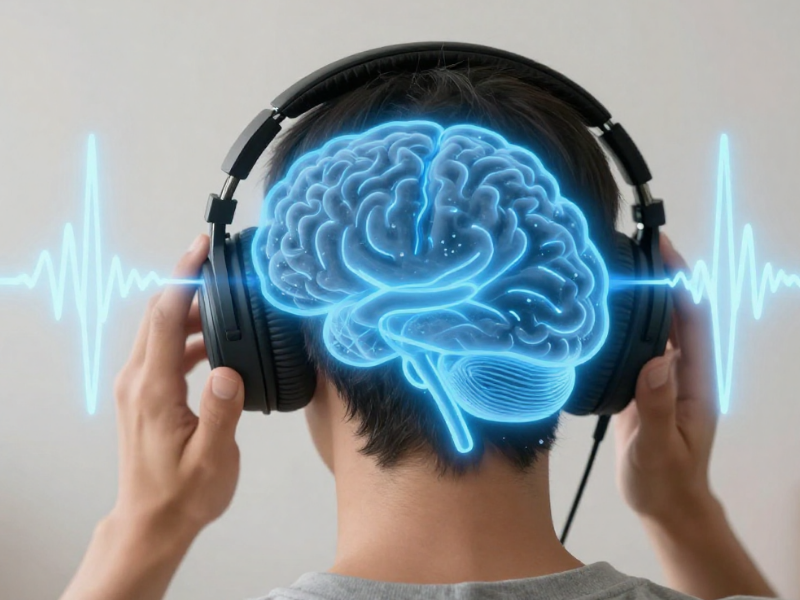
Sound therapy isn’t simply relaxing music or white noise. It’s a targeted neurological intervention that uses specific acoustic frequencies to influence brainwave patterns and neural chemistry.
The approach works through a phenomenon called « neural entrainment », when external rhythmic stimuli synchronize brain oscillations. Think of it as tuning a musical instrument, except you’re optimizing your brain’s electrical activity.
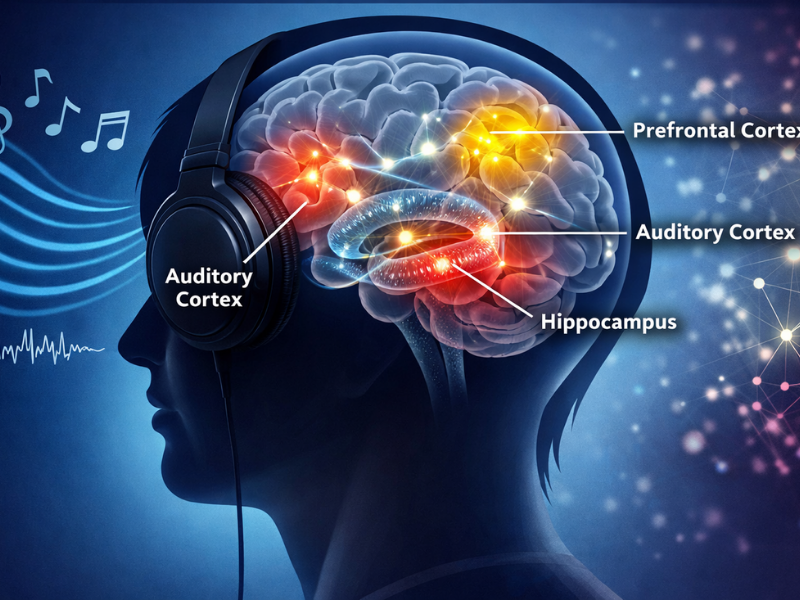
Brain fog typically correlates with disrupted gamma brainwave activity (30-80 Hz). These high-frequency oscillations facilitate communication between different brain regions, supporting memory formation, attention, and cognitive processing.
Sound therapy reduces brain fog by using precise acoustic frequencies, particularly 40 Hz gamma waves, to synchronize neural oscillations and stimulate brain-derived neurotrophic factor (BDNF) production, resulting in measurable improvements in focus, memory, and mental clarity within 2-4 weeks of consistent daily practice.
Before diving deeper into the science, consider exploring evidence-based sound therapy programs that utilize gamma frequency technology. Many reputable providers offer risk-free trial periods, allowing you to experience the benefits personally before making any commitment.
The Neuroscience Behind Sound Therapy and Cognitive Function
How Sound Frequencies Influence Brain Chemistry
Your brain operates through electrical signals oscillating at various frequencies. These brainwaves aren’t random—they correspond to specific mental states and cognitive functions.
Gamma waves (30-80 Hz) represent the highest frequency pattern and correlate directly with peak cognitive performance. Research published in PMC demonstrates that gamma oscillations promote neuroglial coupling and maintain healthy brain function through critical vascular mechanisms.
When you experience brain fog, gamma wave coherence typically decreases. Your neural networks fail to synchronize effectively, creating the subjective experience of clouded thinking, poor concentration, and sluggish mental processing.
Sound therapy addresses this directly. When your auditory cortex processes rhythmic sounds at specific frequencies, your neurons naturally begin firing in synchrony with that external rhythm—a process neuroscientists call « frequency following response. »
A 2020 pilot study published in Brain Informatics found that 40 Hz binaural beat entrainment improved cognitive scores from 75% to 85% average. Participants showed statistically significant improvements after just eight sessions conducted over four weeks.
The BDNF Connection: Your Brain’s Growth Factor
Sound therapy, particularly gamma frequency entrainment, may encourage BDNF activity. Independent research supports the principle that gamma stimulation influences neurotrophic factors, creating an environment conducive to neural health and optimal cognitive function.
Key Benefits of Sound Therapy for Mental Clarity
How Sound Therapy Actually Clears Mental Fog
Neural Entrainment: Synchronizing Your Brain Waves
Neural entrainment represents the fundamental mechanism behind sound therapy’s effectiveness. This well-documented phenomenon occurs when external periodic stimuli influence the brain’s intrinsic oscillatory patterns.
Research from MIT, covered by New Atlas, demonstrates that lights and sounds at 40 Hz can reduce inflammation, decrease DNA damage, and protect brain cells from various forms of stress. The study showed measurable improvements in memory function in experimental models.
The process works through your brain’s natural tendency to synchronize with external rhythms. When you consistently expose your auditory system to 40 Hz frequencies, your neurons begin firing at that same frequency, creating gamma-band oscillations throughout connected brain regions.
This synchronization doesn’t just happen in one isolated area. A 2024 analysis in PMC reviewing gamma wave stimulation confirms that 40 Hz frequencies enhance communication between distant brain areas, improving the integration of sensory information, memory retrieval, and executive function.
The glymphatic system, your brain’s waste removal network, functions more efficiently during gamma oscillation states. Enhanced glymphatic flow means better clearance of metabolic byproducts, including proteins and cellular debris that contribute to cognitive impairment when they accumulate.
Reducing Brain Inflammation Through Acoustic Stimulation
Brain fog often stems from neuroinflammation, chronic low-grade inflammation affecting neural tissue. This inflammatory state disrupts normal neurotransmitter function, impairs synaptic transmission, and creates the subjective experience of mental cloudiness.
Studies indicate that gamma wave stimulation reduces neuroinflammation in the hippocampus. MIT researchers found that gamma therapy decreased inflammatory markers, reduced DNA damage, and increased populations of oligodendrocytes, cells responsible for producing myelin that insulates neural pathways.
Chronic inflammation also suppresses BDNF production. By reducing inflammatory signaling, sound therapy creates conditions favorable for neurotrophic factor expression, supporting the brain’s natural repair and optimization processes.
Research in Heart and Mind journal demonstrates that music therapy reduces cortisol levels and other stress hormones. Physiological arousal decreases during sound exposure, heart rate slows, blood pressure drops, and parasympathetic activation increases.
A study using EEG recordings published via Neuroelectrics showed that specific soundscapes reduce cognitive load. Neural entropy decreased during sessions, indicating greater brain stability and more efficient information processing.
Practical Implementation: Types of Sound Therapy
Binaural Beats: The Accessible Entry Point
Binaural beats deliver slightly different frequencies to each ear through headphones. Your brain perceives a third frequency equal to the mathematical difference between the two tones presented.
For example, playing 240 Hz in your left ear and 280 Hz in your right ear creates a perceived 40 Hz gamma beat. This technique requires no special equipment beyond standard stereo headphones.
Research published by UCLA Health notes that binaural beats show moderate consistent effects on anxiety reduction. A comprehensive review of over 20 studies reveals measurable benefits for memory consolidation and sustained attention.
The key to effectiveness lies in consistency. A study cited by Advanced Brain Technologies suggests that longer cumulative exposure increases the probability of positive neurological changes. Most evidence-based protocols recommend 10-20 minutes of focused listening daily.
Isochronic Tones: Single-Channel Stimulation
Unlike binaural beats, isochronic tones pulse at specific frequencies without requiring stereo separation. You can listen through speakers rather than headphones, making this approach more accessible for extended sessions.
A 2025 study by Vibes AI found that participants using gamma-frequency protocols for 20 minutes daily reported a 35% improvement in sustained attention span. Mental fatigue scores decreased by 50% after four weeks of consistent practice.
The neuroacoustic field combines musical elements with specific acoustic stimuli designed to influence brainwave activity. Isochronic tones represent one evidence-backed modality within this broader therapeutic category.
Clinical applications show promise across multiple populations. Patients report clearer thinking, improved task-switching ability, and reduced subjective mental fatigue when using structured sound therapy protocols consistently over weeks.
Music-Based Gamma Entrainment
Some sound therapy approaches embed gamma frequencies within musical compositions. This makes the listening experience more enjoyable while maintaining the neurological benefits of frequency entrainment.
A comprehensive review in PMC examining neuroplasticity demonstrates music’s positive effects on cognition. The research shows that musical engagement enhances memory, attention, and learning capabilities through both structural and functional brain changes.
Music-based approaches may improve adherence. People find it easier to maintain daily practice when the auditory experience is pleasant rather than purely clinical or monotonous.
Research shows that combining melodic elements with targeted frequencies doesn’t diminish entrainment effects. The brain still responds to the embedded rhythmic patterns while processing the musical content through separate but integrated neural pathways.
Optimal Listening Practices for Maximum Cognitive Benefit
Creating Your Ideal Sound Therapy Environment
Environment significantly influences therapeutic effectiveness. Random background listening provides minimal benefit compared to intentional, focused practice sessions.
Find a quiet space free from interruptions where you can practice consistently. This might be a dedicated room, a comfortable chair in a peaceful corner, or even your parked car before entering work.
Research suggests morning sessions produce optimal results. Your brain exhibits greater neuroplasticity during early waking hours, making it more receptive to new stimulation patterns and easier to establish entrainment.
Close your eyes and focus attention on the sounds. This directed awareness amplifies entrainment effects compared to passive exposure. You’re not trying to « do » anything—simply rest your attention on the acoustic stimulus.
Use quality headphones with good frequency response. Poor audio equipment can distort the precise frequencies necessary for effective neural entrainment. Over-ear headphones typically provide better results than earbuds, especially for binaural beat protocols.
Recommended Session Duration and Frequency
Most research protocols use sessions ranging from 10-30 minutes daily. Longer isn’t necessarily better—consistency matters more than duration.
A 12-15 minute session practiced daily produces better cumulative results than occasional hour-long sessions. Your brain responds to regular, predictable stimulation that establishes stable new oscillatory patterns.
Some people notice immediate relaxation and mental clarity following their first session. However, the neuroplastic changes underlying sustained cognitive improvement typically require 2-4 weeks of consistent practice.
Consider scheduling sessions at the same time daily. This consistency helps establish the practice as an automatic habit while potentially enhancing entrainment effects through temporal anticipation.
Tracking Your Cognitive Improvements
Subjective improvements often precede objective measurements. Keep a simple daily log noting mental clarity, focus quality, and energy levels on a 1-10 scale.
Over weeks, patterns emerge showing whether the intervention helps. This data-driven approach prevents relying on unreliable memory or confirmation bias when evaluating effectiveness.
Track additional variables that influence cognitive function—sleep quality, stress levels, exercise, and significant life events. This context helps you interpret results accurately and identify synergistic factors.
Consider using free online cognitive assessments quarterly. These tests measure processing speed, working memory, and sustained attention, providing objective progress indicators independent of subjective impressions.
Who Benefits Most from Sound Therapy?
Students and Knowledge Workers
If you spend hours processing complex information, sound therapy offers a drug-free cognitive enhancement approach. Research indicates gamma entrainment specifically improves working memory capacity and sustained attention.
Students preparing for standardized tests or professional certifications report sharper recall and better information retention. Knowledge workers managing multiple concurrent projects experience improved task-switching efficiency and reduced mental fatigue.
The technology integrates seamlessly into existing routines. Listen during study breaks, before important presentations, during focused work blocks, or while commuting to prepare your brain for demanding cognitive tasks.
Implementation requires no lifestyle overhaul or significant time investment. Even brief daily sessions produce measurable improvements when practiced consistently over weeks, making this approach sustainable long-term.
Older Adults Experiencing Age-Related Cognitive Changes
Normal aging brings gradual cognitive changes, processing speed slows, memory retrieval becomes less efficient, divided attention grows more challenging, and new learning takes longer.
Sound therapy offers a non-pharmaceutical intervention with minimal side effects. Studies show older adults particularly benefit from approaches enhancing neuroplasticity and BDNF expression.
Research demonstrates that BDNF supplementation through various means, including auditory stimulation, may slow age-related cognitive decline. A 2025 prospective cohort study in the Korean Brain Aging Study found that higher serum BDNF levels protected against progression to mild cognitive impairment.
Accessibility represents a key advantage. Unlike complex computerized brain training programs requiring significant cognitive effort and time investment, sound therapy works relatively passively, you simply listen with focused attention.
People with Post-Viral Cognitive Symptoms
Post-viral syndromes increasingly include persistent cognitive symptoms colloquially termed « brain fog. » Patients describe difficulty concentrating, word-finding problems, memory impairment, and overwhelming mental exhaustion.
While sound therapy isn’t a cure for underlying conditions, it may provide symptomatic relief. MIT research on chemotherapy-induced cognitive impairment suggests gamma therapy protects against various forms of brain stress.
The treatment carries minimal risk and few side effects. Most users tolerate it well, though some initially experience mild dizziness or headache as their brain adjusts to new stimulation patterns.
Always consult healthcare providers before adding complementary therapies, especially if you have underlying medical conditions. Sound therapy should complement, not replace, conventional medical treatment for diagnosed conditions.
Scientific Evidence Supporting Sound Therapy
Clinical Studies on Gamma Wave Entrainment
The evidence base for gamma frequency stimulation continues expanding. A clinical study by The University of Texas at Dallas investigated noninvasive brain stimulation via sound, receiving NIH funding to explore how specific frequencies improve cognitive and sensory function.
Neuroimaging studies using fMRI and EEG provide objective measurements of sound therapy’s impact on brain structure and function. These studies demonstrate measurable changes in regional brain activity, connectivity patterns, and oscillatory coherence.
Research published in Oxford Academic’s Brain Communications examining genetics of circulating BDNF found that BDNF expression correlates with memory formation. The protein shows 30% heritability, and its expression associates with neurofibrillary tangle pathology in neurodegenerative conditions.
A study on BDNF’s role as a biomarker published in MDPI demonstrates that BDNF downregulation associates with cognitive decline, schizophrenia, and Alzheimer’s disease, serving as a potential diagnostic and prognostic marker.
Physical Exercise and BDNF: Synergistic Effects
Physical exercise naturally increases BDNF production. A comprehensive review in ScienceDirect examining physical exercise effects on BDNF found that voluntary physical activity enhances cognitive performance through neurotrophic factor modulation.
This suggests combining sound therapy with regular exercise might produce synergistic benefits. Both interventions target overlapping mechanisms—neuroplasticity, BDNF expression, reduced inflammation, and improved cerebral blood flow.
Research in Translational Neurodegeneration confirms that BDNF plays a crucial role in synaptic plasticity. Reduced BDNF levels associate with Alzheimer’s disease pathology and cognitive impairment across various populations.
The Val66Met polymorphism affects individual responses to BDNF-modulating interventions. Research in Frontiers in Neuroscience shows Met allele carriers display diminished gamma band functional connectivity, possibly due to GABAergic network impairment.
Limitations and Realistic Expectations
Sound therapy represents one tool in a comprehensive cognitive health strategy. It won’t cure neurodegenerative diseases, reverse significant brain damage, or replace medical treatment for serious neurological conditions.
Results vary individually based on genetics, age, baseline cognitive function, and consistency of practice. Some people notice dramatic improvements within weeks, while others experience subtle changes requiring months of dedicated practice.
Severe cognitive impairment warrants professional medical evaluation. If memory problems significantly interfere with daily functioning, consult a neurologist or cognitive specialist rather than relying exclusively on complementary approaches.
The technology works best for functional brain fog—cognitive symptoms without underlying progressive disease. Consider stress-related mental fatigue, post-illness recovery, or mild age-related changes rather than dementia or traumatic brain injury.
Optimizing Results Through Lifestyle Integration
The Essential Role of Sleep Quality
Sound therapy delivers substantially better outcomes when combined with other brain-healthy practices. Sleep quality represents the single most important factor influencing cognitive function.
Your brain consolidates memories and clears metabolic waste during sleep. Chronic sleep deprivation undermines any cognitive enhancement strategy, no matter how evidence-based.
Aim for 7-9 hours of quality sleep nightly. Maintain consistent sleep-wake times, create a dark and cool sleeping environment, limit screen exposure before bed, and avoid caffeine after 2 PM.
Some people use sound therapy protocols specifically designed for sleep enhancement. These typically employ delta and theta frequencies rather than gamma waves, promoting relaxation and deep restorative sleep.
Nutrition’s Impact on Neurotransmitter Function
Your brain requires specific nutrients for optimal neurotransmitter production and cellular function. Deficiencies in B vitamins, omega-3 fatty acids, magnesium, and antioxidants impair cognitive performance.
A Mediterranean-style diet provides excellent cognitive support. Emphasize fatty fish, leafy greens, berries, nuts, olive oil, and whole grains while minimizing processed foods, excess sugar, and inflammatory seed oils.
Stay adequately hydrated. Even mild dehydration (1-2% body weight loss) impairs cognitive function, particularly attention, working memory, and processing speed.
Consider targeted supplementation if dietary intake proves insufficient. Omega-3 EPA/DHA, vitamin D, B-complex vitamins, and magnesium show evidence for supporting cognitive function, though always consult healthcare providers before starting supplements.
Stress Management and Cognitive Performance
Chronic stress impairs cognitive function through multiple pathways—elevated cortisol suppresses hippocampal neurogenesis, inflammation increases, sleep quality decreases, and executive function deteriorates.
Sound therapy addresses stress directly through parasympathetic activation. However, combining it with other stress-reduction practices amplifies benefits.
Consider meditation, deep breathing exercises, progressive muscle relaxation, time in nature, social connection, or engaging hobbies. The specific practice matters less than finding sustainable approaches you’ll maintain long-term.
Monitor your stress levels and adjust as needed. Cognitive enhancement efforts prove futile if you’re simultaneously exposing yourself to chronic, unmanaged stress that overwhelms your brain’s adaptive capacity.
Getting Started: Your Sound Therapy Action Plan
Step 1: Choose Your Modality
Multiple sound therapy approaches exist—binaural beats, isochronic tones, music-based gamma entrainment. Each offers unique advantages depending on your preferences and circumstances.
Start with accessible free options. Many apps provide basic binaural beat generators or gamma frequency tracks. Experiment with different approaches to determine what feels most comfortable and sustainable.
Quality matters for long-term practice. If free options prove helpful initially, consider investing in professionally designed programs. These typically incorporate research-based protocols optimized for specific cognitive outcomes.
Look for programs offering money-back guarantees or trial periods. Reputable providers stand behind their products, allowing risk-free evaluation of effectiveness before financial commitment.
Step 2: Establish Consistent Practice
Decide on your daily practice time and duration. Morning sessions work well for most people, preparing the brain for the day’s cognitive demands.
Start with 12-15 minutes daily. This duration proves sustainable for busy schedules while providing sufficient exposure for neuroplastic changes to develop over weeks.
Set reminders or anchor the practice to existing habits. « After my morning coffee, I’ll do my sound therapy session » creates a behavioral trigger supporting consistency.
Don’t obsess over perfect conditions. A reasonably quiet environment and decent headphones suffice—you don’t need soundproof rooms or audiophile equipment to benefit.
Step 3: Monitor and Adjust
Begin your simple tracking system on day one. Rate mental clarity, focus, and energy levels daily. This data reveals patterns that memory alone would miss.
Reassess after two weeks. Most people notice initial changes by this point, though full benefits typically emerge over 4-8 weeks of consistent practice.
If you notice no improvements after four weeks of daily practice, consider adjusting variables—session duration, time of day, modality type, or combining with other interventions.
Remember that sound therapy works cumulatively. Missing occasional sessions won’t destroy progress, but sporadic practice prevents the stable entrainment patterns underlying sustained cognitive improvement.
Conclusion: Sound as a Pathway to Mental Clarity
Brain fog doesn’t represent an inevitable condition you must accept. Emerging neuroscience demonstrates that sound therapy offers a scientifically grounded, accessible approach to enhancing mental clarity.
The mechanisms are well-established and supported by peer-reviewed research. Gamma frequency entrainment synchronizes neural oscillations, potentially stimulates BDNF production, reduces neuroinflammation, and enhances glymphatic clearance of metabolic waste.
Clinical evidence supports practical applications across diverse populations. Studies demonstrate improvements in memory, attention, processing speed, and stress reduction following consistent sound therapy practice over weeks.
Implementation requires minimal resources and time investment. Quality headphones and 15-20 minutes daily represent your entire equipment and schedule commitment, making this intervention remarkably sustainable compared to complex brain training programs.
Results require patience and realistic expectations. Like physical exercise or meditation, sound therapy produces cumulative benefits over weeks and months rather than overnight transformations.
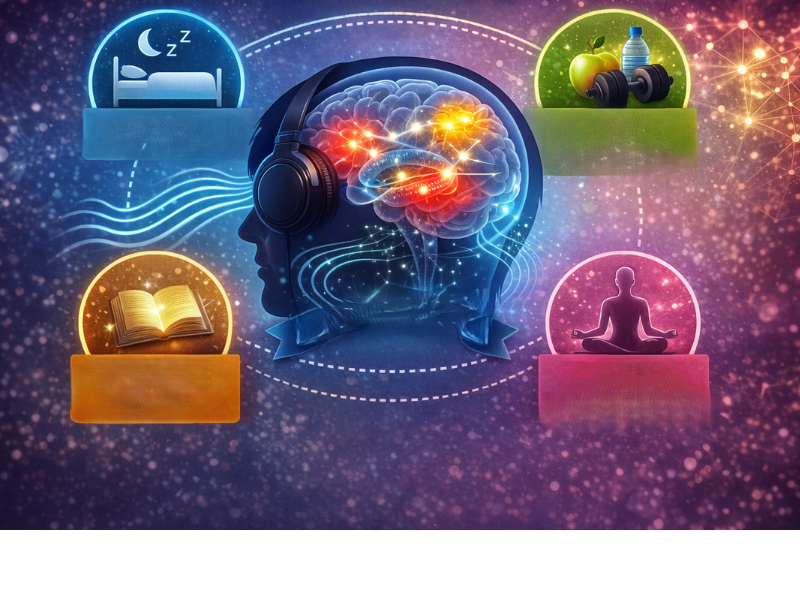
Combine sound therapy with other brain-healthy practices for optimal outcomes. Sleep quality, regular exercise, stress management, and proper nutrition all contribute synergistically to cognitive wellness.
The science continues advancing. Researchers are conducting clinical trials to better understand optimal frequencies, session parameters, individual response predictors, and mechanisms of action.
Your cognitive health deserves evidence-based support. Sound therapy represents a low-risk, accessible intervention worth exploring if brain fog diminishes your quality of life or performance.
Start today with one focused listening session. Notice the immediate effects on your mental state. Commit to two weeks of daily practice. Track your experience objectively. The mental clarity you seek may be just a frequency away.
If you’re ready to experience the cognitive benefits of gamma frequency sound therapy, I recommend exploring professionally designed audio programs that incorporate the research-backed protocols discussed throughout this article.
Look for programs that offer trial periods so you can evaluate effectiveness personally before committing. The investment in your cognitive health today could transform your mental performance, productivity, and quality of life for years to come.
You can learn more by taking the next step and start your journey to mental clarity today.
Scientific References — Summary Table
| Study Title | Source/Journal | Key Findings | Year |
|---|---|---|---|
| Gamma rhythm as guardian of brain health | PMC – Mureşan et al. | Gamma oscillations (30-150 Hz) promote neuroglial coupling and maintain healthy brain function through vascular mechanisms | 2024 |
| Mystery of gamma wave stimulation in Alzheimer’s disease | PMC | 40 Hz gamma stimulation reduces Aβ plaques, improves cognitive symptoms, enhances brain-inter-area communication | 2024 |
| Gamma entrainment frequency affects mood, memory and cognition | PMC – Brain Informatics | 40 Hz binaural entrainment improved cognitive scores from 75% to 85% average in pilot cohort study | 2020 |
| BDNF and hippocampal synaptic plasticity | PubMed – Bekinschtein et al. | BDNF plays critical role in hippocampal long-term potentiation (LTP) underlying learning and memory | 2008 |
| Lower BDNF levels associated with memory impairment | Scientific Reports – Sefuri Study | Lower BDNF levels independently predicted memory impairment in 256 community-dwelling older adults | 2020 |
| BDNF as key molecule for memory in hippocampus | Frontiers in Cellular Neuroscience | BDNF essential for plastic changes related to learning and memory; expression highly regulated by neuronal activity | 2019 |
| Light and sound therapy clears ‘chemo brain’ fog | MIT/New Atlas | 40 Hz light and sound therapy reduced inflammation, DNA damage, myelin damage while improving memory in mice | 2024 |
| Impact of music on bioelectrical brain oscillations | PMC | Music therapy increases alpha activity, improves cognitive function, reduces anxiety in chemotherapy patients | 2018 |
| Sound therapy neurophysiological impact on athletes | Heart and Mind Journal | Sound therapy reduces cortisol levels, improves working memory, attention, and reaction time | 2024 |
| The transformative power of music on cognition | PMC | Music induces neuroplasticity, enhances memory and attention, provides therapeutic cognitive benefits | 2024 |
| What is sound therapy and does it work? | UCLA Health | Binaural beats show moderate consistent effect on anxiety; review of 20+ studies shows memory and attention benefits | 2025 |
| Music therapy heals the brain through neuroscience | Neuroelectrics/Science Direct | EEG studies show singing bowl sessions decrease neural entropy, indicating lower cognitive load | 2025 |
| BDNF Val66Met polymorphism and gamma band | Frontiers in Neuroscience | Met allele carriers showed diminished gamma band functional connectivity due to GABAergic network impairment | 2018 |
| BDNF role as biomarker in neurological disorders | MDPI | BDNF downregulation associated with cognitive decline, schizophrenia, Alzheimer’s; serves as potential biomarker | 2023 |
| Physical exercise effects on BDNF and cognition | ScienceDirect | Voluntary physical activity enhances cognitive performance through BDNF modulation | 2023 |
| Serum BDNF and progression to mild cognitive impairment | ScienceDirect | Higher serum BDNF levels associated with reduced MCI incidence in 4-year follow-up study | 2025 |
| BDNF in Alzheimer’s disease pathology | Translational Neurodegeneration | BDNF plays crucial role in synaptic plasticity; reduced levels associated with AD pathology | 2022 |
| Genetics of circulating BDNF and memory formation | Oxford Academic – Brain Communications | BDNF shows 30% heritability; expression associated with neurofibrillary tangles; plays key role in memory | 2020 |
| Non-invasive brain stimulation via sound at UT Dallas | The University of Texas at Dallas | NIH-funded research exploring how specific sound frequencies improve cognitive and sensory function | Ongoing |
Medical Disclaimer
Important Notice: I am not a medical doctor, neurologist, or licensed healthcare professional. The information provided in this article is for educational and informational purposes only and should not be considered medical advice.
Sound therapy for cognitive enhancement is an emerging field with promising research, but individual results may vary significantly. This intervention should not replace professional medical diagnosis or treatment for cognitive disorders, neurological conditions, or mental health concerns.
If you experience persistent or severe cognitive impairment, memory problems, confusion, or other concerning neurological symptoms, please consult a qualified healthcare provider immediately. Do not delay seeking professional medical care based on information presented in this article.
Before beginning any new health intervention, including sound therapy protocols, consult with your physician or other qualified healthcare professional, especially if you have existing medical conditions, take medications, have a history of seizures, or are pregnant or nursing.
The scientific studies referenced in this article represent current research at the time of writing but may not reflect the complete body of evidence or future research findings. Medical and scientific understanding evolves continuously.
Individual responses to sound therapy vary based on numerous factors including genetics, age, health status, consistency of practice, and other variables. Results described in research studies may not be representative of outcomes for all individuals.
This article contains affiliate recommendations for sound therapy products. I may receive compensation if you choose to purchase recommended products, though this does not influence the scientific accuracy of the information presented.
Always prioritize evidence-based medical care from licensed professionals over complementary or alternative approaches when dealing with serious health concerns.