Why Busy Professionals Struggle With Belly Fat More Than Anyone Else
You already know the standard advice — eat less, move more. Yet despite long hours, high pressure, and the best intentions, your waistline keeps expanding. If you are a time-poor professional carrying weight around your midsection that simply will not budge, this article was written specifically for you.
You are not alone. Studies consistently show that the combination of chronic work stress, irregular eating patterns, sedentary desk work, and disrupted sleep — the hallmarks of the professional lifestyle — creates a physiological environment that actively drives visceral fat accumulation. Standard calorie-cutting strategies often fail to address the biological mechanisms at work.
In this article, you will learn:
This is not about crash diets or punishing workout regimes. It is about understanding the science of why your belly fat is there — and what you can realistically do about it.

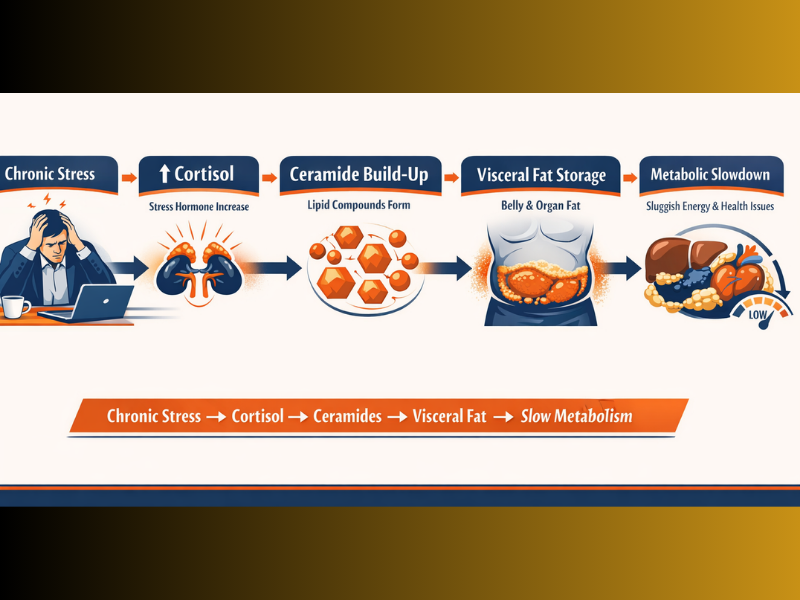
To understand how to lose stubborn belly fat for busy professionals, you first need to understand why it accumulates differently in people who live under constant pressure, sleep deprivation, and irregular schedules. The answer involves two interconnected biological systems: the stress-cortisol axis and, more recently identified, the ceramide pathway.
Scientists have spent decades examining why some people gain fat preferentially around the abdomen and organs — so-called visceral fat — while others gain it subcutaneously. This distinction matters enormously, because visceral fat is metabolically active in ways that subcutaneous fat is not. It releases inflammatory molecules, disrupts insulin signaling, and actively slows the liver’s fat-burning capacity. Understanding what drives it is the first step to addressing it.
How to lose stubborn belly fat for busy professionals requires addressing the biological root causes specific to high-stress lifestyles: elevated cortisol from chronic stress, disrupted metabolic signaling from ceramide accumulation, and poor sleep quality. Effective strategies combine stress management, time-efficient exercise, anti-inflammatory nutrition, and compounds shown to support liver-based fat metabolism and visceral adipose reduction.
Your schedule is demanding, but your metabolism doesn’t have to suffer for it. If chronic stress, irregular meals, and limited exercise time are driving stubborn belly fat, you can explore this carefully formulated blend designed specifically for busy lifestyles.
The Ceramide Problem: What Peer-Reviewed Science Says About Stubborn Belly Fat
Ceramides are a class of bioactive sphingolipids — naturally occurring lipid molecules — that accumulate in metabolic tissues in response to diets high in saturated fat, chronic inflammation, and elevated stress hormones. They are not simply inert fat molecules. At elevated concentrations, ceramides actively disrupt the body’s ability to burn fat, impair insulin signaling in muscle and liver cells, and drive visceral adipose accumulation in a self-reinforcing cycle.
A landmark study from the Dallas Heart Study, which analyzed 1,557 participants, found that visceral adipose tissue was positively and significantly associated with elevated saturated fatty acid ceramide species, even after controlling for total body fat, BMI, and other clinical variables [Ref. 1]. In other words: ceramide accumulation and visceral fat are not just correlated — they appear to drive each other.
A 2022 review published in Cellular and Molecular Life Sciences confirmed that as obesity progresses, specific ceramide molecular species accumulate in metabolic tissues — liver, skeletal muscle, heart, and adipose tissue — and cause cell-type-specific lipotoxic reactions that fundamentally disrupt metabolic homeostasis [Ref. 2]. Importantly, the review noted that reducing specific ceramide pools in obese rodents was sufficient to meaningfully improve metabolic health.
Perhaps most relevant for professionals: a 2016 review in the FASEB Journal identified C16:0 ceramide as the principal mediator of obesity-derived insulin resistance, impaired fatty acid oxidation, and hepatic fat accumulation — all of which directly correspond to the symptoms of professional belly fat that refuses to respond to diet [Ref. 3].
What the Research Confirms About Ceramides and Belly Fat
Why Professional Stress Specifically Targets Your Midsection
Not all fat responds equally to stress. Visceral fat — the deep abdominal fat surrounding your organs — has a significantly higher density of cortisol receptors than subcutaneous fat. This means it responds more aggressively to the cortisol released during chronic psychological stress, taking up fat molecules faster and resisting breakdown when cortisol levels remain persistently elevated.
For busy professionals, the cortisol load is substantial and often unrelenting. Back-to-back meetings, performance pressure, financial stress, long commutes, and the inability to properly decompress between work cycles all contribute to chronically elevated cortisol. This cortisol environment does three things simultaneously: it increases appetite for high-calorie foods, slows fat mobilization from abdominal depots, and accelerates ceramide synthesis in visceral adipose tissue.
A 2017 study in the FASEB Journal confirmed the direct mechanistic link: C16:0 ceramide — the ceramide species most associated with visceral fat — directly impairs mitochondrial fatty acid oxidation, meaning your cells physically cannot burn fat efficiently when ceramide levels are high [Ref. 3]. For professionals under stress, this creates a compounding biological cycle that standard dieting simply cannot break on its own.
The practical implication is significant: for professionals who want to reduce belly fat effectively, managing the stress-cortisol-ceramide pathway is not a lifestyle luxury — it is a metabolic necessity.
The Sleep-Belly Fat Connection Busy Professionals Cannot Afford to Ignore
For high-achieving professionals, sleep is often the first thing sacrificed in the pursuit of productivity. The metabolic consequences of this trade-off are now well-documented — and visceral fat accumulation is directly among them.
Sleeping fewer than six hours per night consistently elevates cortisol, suppresses growth hormone (which is essential for fat mobilization), increases ghrelin (the hunger hormone), and decreases leptin (the satiety signal). The net result is a physiological state that simultaneously drives appetite for calorie-dense foods and impairs the body’s ability to burn stored fat — particularly the visceral fat around the abdomen.
Research has also identified a direct relationship between poor sleep quality and elevated ceramide levels, linking sleep deprivation to the same ceramide-driven metabolic disruption discussed above. For professionals, improving sleep quality is therefore one of the highest-leverage, lowest-cost interventions available for reducing stubborn abdominal fat — and it requires no gym membership or food preparation time.
Practical targets supported by research: aiming for 7–8 hours of sleep per night, maintaining consistent sleep and wake times even on weekends, reducing screen exposure 60 minutes before bed, and keeping bedroom temperature cool. These changes can measurably reduce cortisol levels, improve growth hormone pulsatility, and shift the metabolic environment away from fat storage and toward fat utilization.
Time-Efficient Nutritional Strategies to Reduce Visceral Fat
The dietary approach most consistently supported by research for reducing visceral fat is not the most restrictive one — it is the most anti-inflammatory one. For professionals with limited meal prep time, the goal is to structure eating patterns that reduce ceramide-generating saturated fat intake, support liver metabolism, and provide antioxidant protection for visceral adipose tissue.
Prioritize an Anti-Inflammatory Dietary Pattern
Multiple systematic reviews confirm that diets rich in omega-3 fatty acids, polyphenols, fiber, and lean protein are associated with significantly lower visceral fat mass and better metabolic markers, even at the same caloric intake as standard Western diets. For professionals, this translates to practical anchors: fatty fish twice weekly, a handful of mixed berries daily, olive oil as the primary cooking fat, and a focus on vegetables at every meal.
Time-Restricted Eating (TRE)
A growing body of research supports time-restricted eating — confining food intake to an 8–10 hour daily window — as an effective and low-effort strategy for reducing visceral fat in people with busy schedules. A randomized trial published in Cell Metabolism found that participants practicing TRE without caloric restriction lost significant abdominal fat over 12 weeks. For a professional, this might simply mean delaying breakfast until 9 AM and finishing dinner by 7 PM.
Reduce Ultra-Processed Foods and Refined Carbohydrates
Ultra-processed foods drive ceramide synthesis by providing abundant saturated fatty acid substrates and promoting systemic inflammation. Even brief dietary interventions that sharply reduce processed food intake have been shown to decrease circulating ceramide concentrations and improve metabolic markers within weeks. For busy professionals, this is most effectively addressed by replacing convenience snacks with nuts, fruit, and pre-portioned whole foods rather than attempting comprehensive meal plans.
Support Liver Function
Since the liver is the primary organ responsible for metabolizing both dietary fat and ceramides, supporting its function is directly relevant to reducing visceral fat. Foods that support liver health include cruciferous vegetables (broccoli, Brussels sprouts), garlic, beets, olive oil, and compounds like silymarin from milk thistle — which has been studied specifically for its hepatoprotective properties and role in facilitating fat metabolism.
What the Science Says About Specific Compounds Studied for Visceral Fat Reduction
Beyond general dietary patterns, a number of specific compounds have been investigated in peer-reviewed research for their potential to support visceral fat metabolism, reduce ceramide-driven metabolic disruption, and improve metabolic efficiency in the context of a busy, stressful lifestyle.
Fucoxanthin — Marine Carotenoid
Fucoxanthin is a carotenoid derived from brown edible seaweed with one of the most consistent research profiles for anti-obesity effects among natural compounds. Its proposed mechanisms include upregulation of uncoupling protein 1 (UCP1) in abdominal white adipose tissue — essentially turning visceral fat cells into heat-generating furnaces — and inhibition of lipogenic enzyme activity.
A double-blind, placebo-controlled clinical trial in mildly obese Japanese adults (BMI > 25) found that 3 mg/day of fucoxanthin for 4 weeks produced statistically significant reductions in body weight, BMI, and visceral fat area compared to placebo. Even the lower 1 mg/day dose produced significant reductions in total fat mass, subcutaneous fat area, and waist circumference [Ref. 8].
A 2015 review published in Marine Drugs confirmed that fucoxanthin consistently attenuated visceral fat weight gain, lipid accumulation in the liver, insulin resistance, and plasma lipid dysregulation in animal models — while identifying the AMPK pathway as a key mediator of these effects [Ref. 9].
EGCG (Epigallocatechin Gallate) — Green Tea Polyphenol
EGCG, the predominant bioactive catechin in green tea, has been studied extensively for its effects on fat oxidation, thermogenesis, and metabolic rate. A randomized double-blind trial published in PubMed (2016) found that 12 weeks of combined EGCG and resveratrol supplementation significantly increased mitochondrial oxidative capacity and shifted the body toward greater fat oxidation compared to placebo in overweight and obese subjects — with visceral adipose tissue tending to decrease [Ref. 10].
A systematic review and meta-analysis published in the Journal of Nutritional Biochemistry analyzed EGCG’s physiological effects on energy expenditure and fat oxidation across multiple human studies, confirming a consistent positive effect on the body’s ability to use fat as fuel [Ref. 11]. For busy professionals who cannot maintain consistent high-intensity exercise, the metabolic support provided by EGCG may represent a meaningful adjunct strategy.
Resveratrol — Polyphenol from Red Grapes and Plants
Resveratrol has accumulated one of the largest bodies of clinical evidence among natural metabolic compounds. A 2018 systematic review and meta-analysis of 36 randomized controlled trials found that resveratrol supplementation significantly reduced body weight, BMI, waist circumference, and fat mass, while significantly increasing lean mass [Ref. 12]. The effect was most pronounced in obese subjects.
Resveratrol’s mechanisms include activation of the SIRT1-AMPK pathway, which improves mitochondrial function, enhances fatty acid oxidation, and promotes the breakdown of stored triglycerides in visceral adipose tissue. Combined with EGCG, its effects appear additive, as shown in the 12-week RCT cited above.
Milk Thistle (Silymarin) — Liver and Fat Metabolism Support
Silymarin, the active compound in milk thistle, has been primarily studied for its hepatoprotective properties — its ability to protect and support the regeneration of liver cells. Since the liver is the primary organ responsible for processing dietary fat and metabolizing ceramides, silymarin’s role in visceral fat management operates through liver function optimization. Multiple clinical reviews confirm that silymarin reduces liver fat content and improves liver enzyme profiles in people with non-alcoholic fatty liver disease, which is closely linked to visceral fat accumulation.
Panax Ginseng — Adaptogenic Metabolic Support
Panax ginseng has been used therapeutically for millennia in East Asian medicine and has accumulated modern research supporting its role in metabolic health. Research cited across multiple reviews shows that ginsenosides — the active components of Panax ginseng — support healthy gut microbiota composition, reduce inflammation in adipose tissue, and promote the pattern of calorie burn that favors fat oxidation over fat storage. For professionals under chronic stress, ginseng’s adaptogenic properties may also help modulate the cortisol-belly fat connection.
Taraxacum (Dandelion) — Liver and Digestive Support
Taraxacum officinale has a long tradition of use for liver and digestive support, and modern research confirms its relevance to fat metabolism. Studies show that taraxacum promotes bile production and secretion, which is essential for dietary fat digestion and transport. By supporting optimal liver function and digestive efficiency, taraxacum may help reduce the fat accumulation burden on an already-stressed metabolic system. Its diuretic properties also help reduce the water retention that often accompanies visceral fat accumulation.
Exercise Strategies That Fit a Professional’s Schedule — and Actually Reduce Visceral Fat
For professionals with limited time, the research is reassuringly practical: you do not need to spend hours in the gym to meaningfully reduce visceral fat. The evidence consistently supports specific, time-efficient exercise modalities that deliver outsized returns on a limited time investment.
High-Intensity Interval Training (HIIT)
Multiple systematic reviews confirm that HIIT — alternating brief periods of high-intensity effort with short recovery periods — produces comparable or superior reductions in visceral fat compared to continuous moderate-intensity exercise, in significantly less total time. A 20-minute HIIT session performed three to four times per week has been shown to meaningfully reduce waist circumference and abdominal fat mass within 8–12 weeks. For a professional, this means meaningful metabolic impact in time blocks that fit between meetings.
Resistance Training
Strength training is frequently underutilized by professionals focused on cardio for belly fat loss — yet the research strongly supports it. Building muscle mass increases resting metabolic rate, which means your body burns more calories at rest throughout the workday. Two to three 30-minute resistance training sessions per week have been shown to reduce visceral fat and improve insulin sensitivity, even when dietary habits remain relatively unchanged.
NEAT (Non-Exercise Activity Thermogenesis)
For professionals who sit at desks for long stretches, NEAT — the energy expended through all non-exercise movement — may represent the most practical and immediate opportunity. Standing desks, walking meetings, taking stairs, and brief movement breaks every 45–60 minutes all contribute to daily energy expenditure in ways that accumulate significantly over time. Research shows that low NEAT is an independent predictor of visceral fat accumulation, separate from formal exercise habits.
Putting It All Together: A Realistic Strategy for Busy Professionals Who Want to Lose Belly Fat
Understanding how to lose stubborn belly fat for busy professionals starts with accepting that the standard advice — eat less, exercise more — addresses the symptom without addressing the biology. The peer-reviewed science has now clearly identified the mechanisms that make professional belly fat so resistant to conventional strategies: chronically elevated cortisol, ceramide-driven metabolic disruption, impaired liver fat metabolism, poor sleep, and a sedentary work environment that compounds all of the above.
The good news is that the same science that explains the problem also points to practical, time-efficient solutions. An anti-inflammatory dietary pattern — focused on fatty fish, polyphenol-rich plant foods, liver-supporting vegetables, and minimally processed foods — directly addresses the nutritional drivers of ceramide accumulation and visceral fat storage. Time-restricted eating reduces the metabolic burden without requiring calorie tracking. Brief, high-intensity workouts three to four times per week produce visceral fat reductions comparable to much longer moderate-intensity sessions. Consistent, high-quality sleep is arguably the single highest-return lifestyle change available for professional belly fat reduction.
Beyond these foundations, the scientific literature on specific plant-derived compounds — fucoxanthin, EGCG, resveratrol, milk thistle silymarin, Panax ginseng, and taraxacum — offers meaningful support for the biological pathways most directly implicated in professional belly fat. These are not magic solutions. But they are compounds that have been studied in peer-reviewed clinical settings and shown to interact with the specific metabolic mechanisms — ceramide reduction, fat oxidation, liver function support, and inflammation modulation — that drive visceral fat accumulation.
For the busy professional, the most important shift is strategic: stop fighting belly fat with willpower alone, and start supporting the biology that drives it. That is the approach the science supports — and the one most likely to produce lasting results alongside a demanding career.
If the demands of your professional life — the stress, irregular schedules, late nights, and desk-bound days — have led to stubborn belly fat that diet and exercise alone are not shifting, the root cause may be biological rather than behavioral. If you want to address it at its source, you may want to explore this science-informed morning formula that thousands of busy adults have already integrated into their routine without disrupting their schedule.
Scientific References — Summary Table
| Ref. | Compound / Topic | Key Finding | Source / Year | URL / DOI |
|---|---|---|---|---|
| 1 | Ceramides & visceral adiposity (Dallas Heart Study) | 1,557 participants: visceral adipose tissue significantly and positively associated with saturated ceramide species even after controlling for total body fat and BMI. | Diabetologia, Neeland et al. (2018) | pubmed.ncbi.nlm.nih.gov/30159588/ |
| 2 | Ceramides in obesity-associated metabolic disease (review) | Specific ceramide species accumulate in liver, muscle, heart and adipose tissue in obesity, causing lipotoxic reactions and metabolic dysfunction; reducing ceramide pools in rodents improved metabolic health. | Cell. Mol. Life Sci., Bandet et al. (2022) | pubmed.ncbi.nlm.nih.gov/35789435/ |
| 3 | C16:0 Ceramide & impaired fatty acid oxidation | C16:0 ceramide identified as principal mediator of obesity-derived insulin resistance, impaired mitochondrial fatty acid oxidation, and hepatic steatosis. | FASEB Journal, Fucho et al. (2017) | faseb.onlinelibrary.wiley.com/doi/10.1096/fj.201601156r |
| 4 | Ceramides in visceral vs subcutaneous adipose tissue | Paired tissue analysis in bariatric patients: ceramide species linked to insulin resistance significantly elevated in visceral vs subcutaneous adipose tissue of prediabetic/diabetic subjects. | Obesity Sci. & Practice, Ahmed et al. (2022) | pubmed.ncbi.nlm.nih.gov/35470585/ |
| 5 | Ceramides as early metabolic syndrome markers (primate study) | Circulating ceramides were significantly altered in early stages of metabolic syndrome development — before clinical markers such as adiposity or glucose changes were detectable. | Scientific Reports, Nature (2022) | nature.com/articles/s41598-022-14083-3 |
| 6 | Diet-induced weight loss, gut microbiota & ceramides | Gut microbiota richness associated inversely with ceramide levels; diet-induced weight loss that improved gene richness also decreased most sphingolipid species including ceramides. | PubMed, Aron-Wisnewsky et al. (2019) | pubmed.ncbi.nlm.nih.gov/31605240/ |
| 7 | Ceramides, liver fat & adipose tissue inflammation | Subjects with high liver fat had significantly increased ceramide and triglyceride content in adipose tissue, along with elevated macrophage infiltration, independent of BMI. | Diabetes, Kolak et al. (2007) | pubmed.ncbi.nlm.nih.gov/17620421/ |
| 8 | Fucoxanthin — double-blind RCT in mildly obese adults | 3 mg/day fucoxanthin for 4 weeks: statistically significant reductions in body weight, BMI, and visceral fat area vs placebo. 1 mg/day also reduced total fat mass, subcutaneous fat, and waist circumference. | Functional Foods in Health & Disease, Hitoe & Shimoda (2017) | ffhdj.com/index.php/ffhd/article/view/333 |
| 9 | Fucoxanthin — anti-obesity review (Marine Drugs) | Fucoxanthin consistently attenuated visceral fat, liver lipid accumulation, insulin resistance, and plasma dyslipidemia in high-fat diet models; mechanisms include UCP1 upregulation and AMPK activation in visceral adipose tissue. | Marine Drugs, Gammone & D’Orazio (2015) | pmc.ncbi.nlm.nih.gov/articles/PMC4413207/ |
| 10 | EGCG + Resveratrol — 12-week RCT in overweight adults | 12 weeks of EGCG+RES supplementation significantly increased mitochondrial oxidative capacity and stimulated fat oxidation compared to placebo; visceral adipose tissue tended to decrease (p=0.09). | Am. J. Clin. Nutr., Most J. et al. (2016) | pubmed.ncbi.nlm.nih.gov/27194304/ |
| 11 | EGCG — systematic review & meta-analysis on fat oxidation | Systematic review and meta-analysis confirmed EGCG produces consistent positive effects on energy expenditure and fat oxidation in human studies. | J. Nutr. Biochem., Kapoor et al. (2017) | pubmed.ncbi.nlm.nih.gov/27883924/ |
| 12 | Resveratrol — meta-analysis of 36 RCTs on weight loss | Meta-analysis of 36 RCTs: resveratrol significantly reduced body weight (p=0.03), BMI, fat mass, and waist circumference, and significantly increased lean mass; effects strongest in obese subjects. | Nutrition Research, Batista Tde et al. (2018) | pubmed.ncbi.nlm.nih.gov/30421960/ |
Medical Disclaimer
I am not a medical doctor, dietitian, or licensed healthcare provider. The information in this article is provided for general educational and informational purposes only and does not constitute medical advice, diagnosis, or treatment. All content draws on publicly available peer-reviewed scientific literature and is intended to help readers make more informed decisions about their health and lifestyle.
If you have existing health conditions — including diabetes, cardiovascular disease, liver disease, or metabolic syndrome — or if you are taking prescription medications, please consult a qualified physician or registered dietitian before making changes to your diet, exercise, or supplement routine. Weight loss results vary significantly between individuals.
This article may contain affiliate links. If you purchase through these links, I may earn a commission at no additional cost to you. My editorial content remains independent and is based on genuine research review.